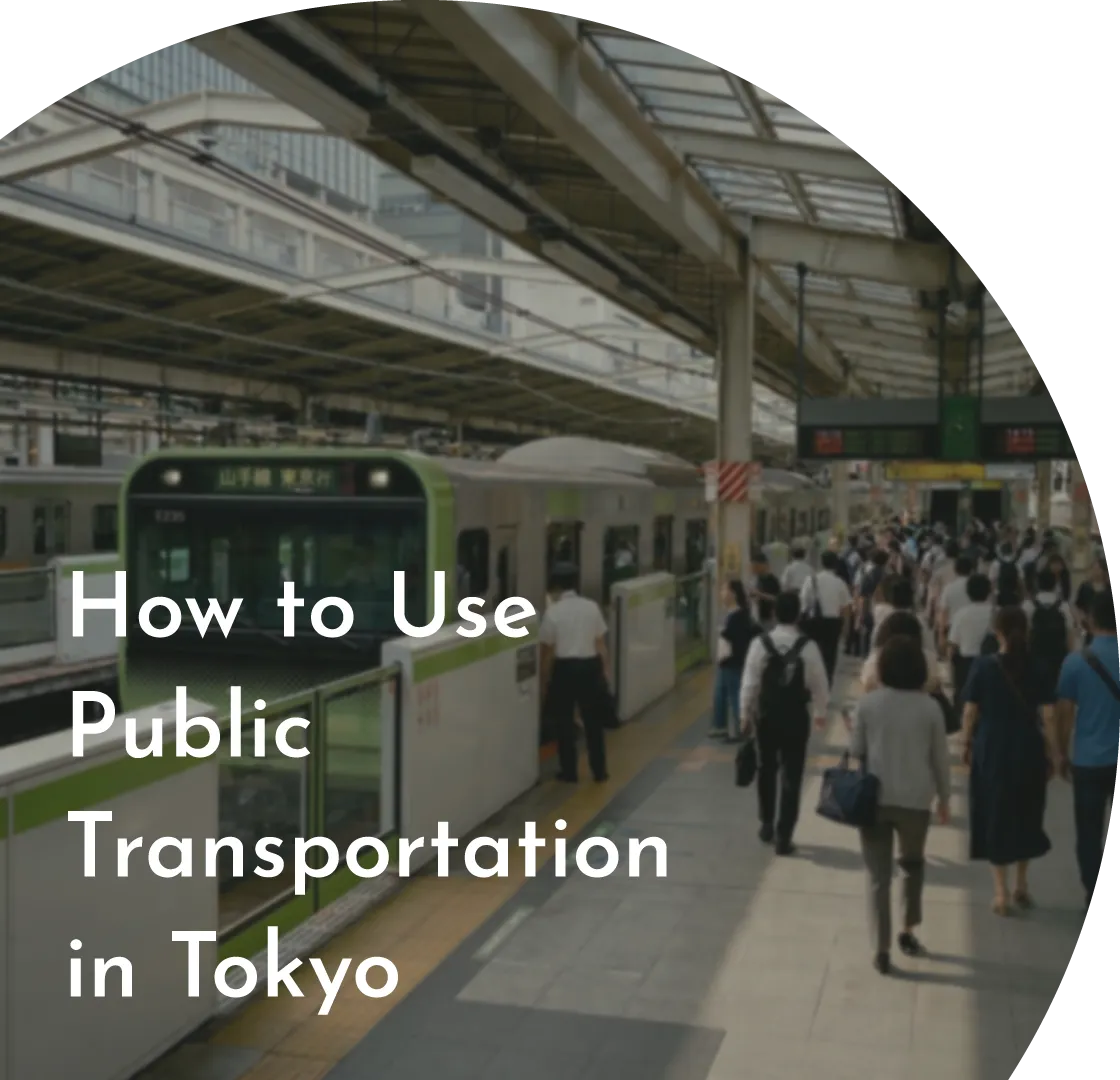
How to Use Public Transportation in Tokyo
Tokyo has one of the most extensive transport networks in the world. It's incredibly convenient, but that same scale can make the system feel a little complex at first.
On this page, you'll find the essential information you need to move around Tokyo smoothly and with confidence.
1. Tokyo’s Railway System Is a Bit Complex
Tokyo’s railway network is operated by multiple private companies and public operators.
Major operators include:
JR East / Tokyo Metro / Toei Subway / Tokyu / Odakyu / Keio / Seibu / Keisei / Keikyu
Each operator runs its own network independently, while cooperating in certain areas. In most cases, each railway company has its own ticket gates leading to its platforms. For example, even within “Shinjuku Station,” the ticket gates for JR lines and Odakyu lines are separate. This structure is one of the main reasons the system can feel complicated at first.
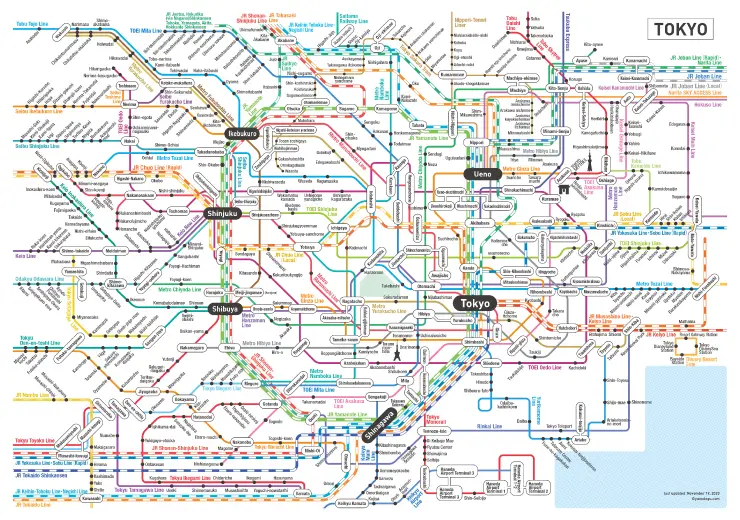
How Fares Are Calculated
Fares are generally based on distance. Once you exit through a ticket gate, your fare is finalized at that point.
For example:
🚃 Ikebukuro → Shibuya: 210 yen
If you exit at Shinjuku along the way:
- 🚃 Ikebukuro → Shinjuku: 200 yen
- 🚃 Shinjuku → Shibuya: 200 yen
- ➡️ Total: 400 yen
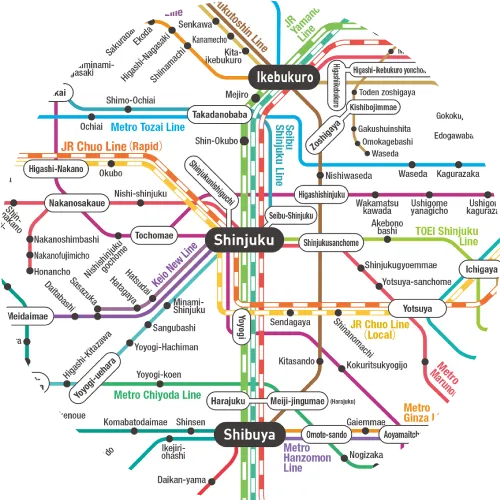
… Fares shown are the paper ticket prices as of April 2026.
Even though the physical route is the same, exiting mid-journey changes how the fare is calculated.
Transfers Between Different Operators
When transferring to a different operator’s line, you often need to exit one set of gates and enter another. However, some lines allow transfers without passing through standard gates, or provide special transfer gates that process both exit and entry at once.
There are also through services, where a single train runs across lines operated by different operators. You may stay on the same train even though the operator changes during the journey.
2. Payment: Start with an IC Card (Suica/PASMO)
In Tokyo, many ticket gates and ticket machines do not accept credit cards directly.
In practice, payment for regular trains and local buses is usually either cash or an IC card.
For most travelers, using an IC card such as Suica or PASMO is the simplest and easiest option in Tokyo.
IC cards are prepaid. You can either get a physical plastic card, or add a digital version to a compatible smartphone wallet.
💡For details about IC cards, see:
→ #002 How to Get and Use an IC Card in Japan
Where IC Cards Can Be Used
Although the names differ depending on the issuing operator (Suica, PASMO, etc.), they are collectively known in Japanese as 交通系IC (kōtsū-kei IC), meaning “transit IC cards.”
Regardless of which operator issued the card, it can be used for:
- Trains
- Subways
- Local buses
- Convenience stores
- Some vending machines
- Many other shops displaying the “transport IC” symbol
For example, a Suica issued by JR East also works on Tokyo Metro lines and buses.
How to Use an IC Card on Trains
When you tap at the ticket gate to enter, the system records your entry station. When you exit, the correct fare is automatically deducted from your IC card balance.
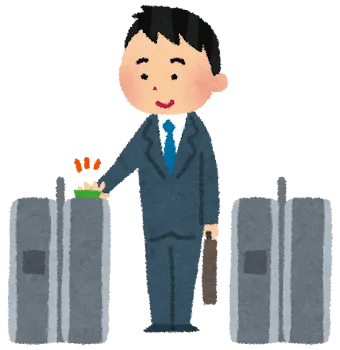
If your balance is too low, you won’t be able to exit, but you can pay the difference at a Fare Adjustment Machine near the gate.
If you forget to tap or encounter an error, simply show your card to station staff. They deal with this every day and will help you sort it out.
Things to Keep in Mind
⚠️ Some faster trains (called “limited express” trains) and long-distance services such as the Shinkansen cannot be used with an IC card alone. In many cases, you will need to buy an additional ticket, although some services allow you to buy tickets online and link them to your IC card.
⚠️ Many highway buses also require advance online reservations or ticket purchases at a counter.
⚠️ IC cards are widely accepted in cities across Japan, including Tokyo, but some regional areas still do not support them. If you’re traveling to rural areas, it’s advisable to carry cash to buy tickets. The next section explains how to buy paper tickets.
3. Alternatively: Using Paper Tickets on Trains
Even without an IC card, you can still travel using paper tickets. However, paper ticket fares are usually slightly higher than IC card fares, though the difference is only a few yen.
How to Buy a Ticket
- Find your destination on the route map above the ticket machines.
- Check the displayed fare.
- Press the corresponding fare button and purchase your ticket.
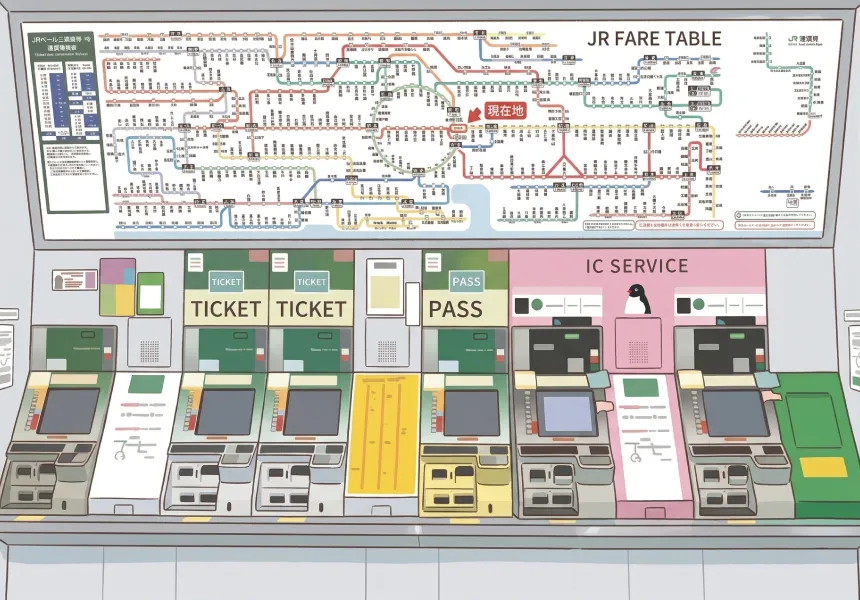
⚠️ Many ticket machines accept cash only. At smaller stations in particular, credit card payment may not be available, so carrying some cash is a good idea.
How to Use the Ticket Gates
- Entry … Insert the ticket into the gate (it will come back out after you pass).
- Exit … Insert the ticket again (it will not be returned).
⚠️ Gates marked “IC” are for IC cards only and cannot be used with paper tickets.
4. Using Local Buses
IC cards can also be used on most local buses in Tokyo. There are two common ways to board and pay on buses.
Pay When You Board
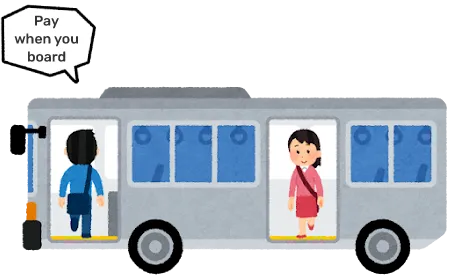
In central Tokyo, many buses use a flat fare system and require payment when you board at the front door, with passengers exiting from the rear door.
A fare machine where you either tap your IC card or insert cash is next to the driver. The flat fare is usually between 210 and 250 yen (as of 2026), depending on the operator.
Pay When You Get Off
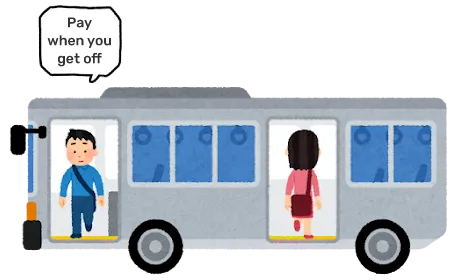
In suburban areas, buses often use distance-based fares and require payment when you get off.
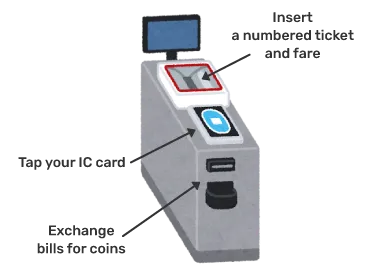
- Boarding … Enter from the rear door and tap your IC card on the reader by the door. This records where you boarded.
If paying in cash, take a numbered ticket when you board. It shows where you got on. - Getting Off … Tap your IC card on the reader next to the driver to pay, then exit from the front door.
If paying in cash, insert your numbered ticket and the correct fare into the machine.
Things to Know Before Getting Off
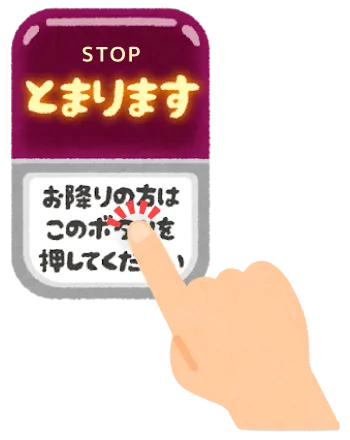
On most buses in Japan, you need to press a stop button before your stop to let the driver know you want to get off. These buttons are located throughout the bus.
If no one presses the button, the bus may not stop.
💡Helpful Video:
→ How to use buses from Nishitokyobus
5. Child Fares: Half Price for Ages 6-11, Free for Under 6
Children (ages 6-11):
Half of the adult fare
→ A child ticket must be purchased, or a child IC card must be used.
Young children (ages 1-5):
Each adult may bring up to two young children free of charge
Babies (under 1 year old):
Free
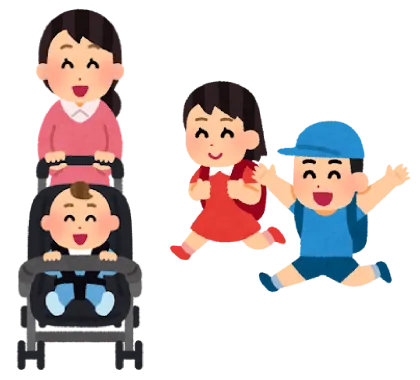
These rules generally apply to trains, subways, and most buses.
6. Contactless Credit Card Gates Are Starting to Appear
Some airport access lines have recently introduced contactless credit card payment at ticket gates.
However:
- Only certain lines support it
- Only some gates are compatible
- It is not available throughout all of Tokyo
For now, it’s better to think of it as a limited option rather than a standard method. An IC card is still the most practical choice for a smooth trip.
7. Be Aware of Last Trains and Rush Hour
Don’t Miss the Last Train
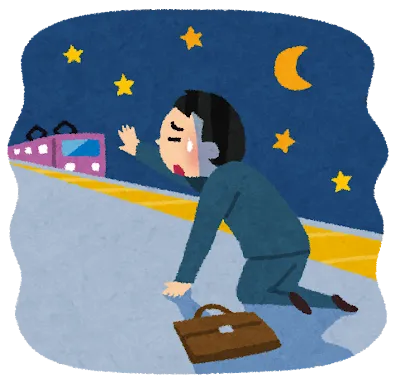
Japan’s railway system does not operate 24 hours a day.
On most lines, the last trains run between 11:30 PM and 12:30 AM, and the first trains usually start running between 4:30 AM and 5:30 AM.
Avoid Rush Hour If You Can
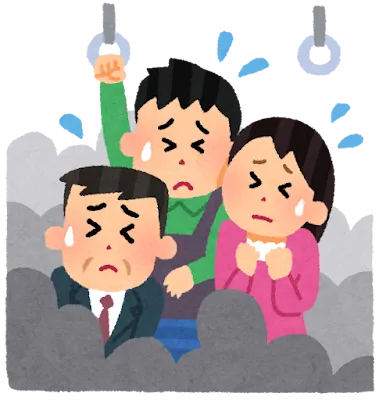
Weekday mornings (7:30-9:30 AM) and evenings (5:30-7:30 PM) are extremely crowded. If your schedule allows, avoiding these times will make your journey much more comfortable.
If this article was useful to you, support via
 is appreciated.